Quick answer
The short answer: Plan the line in three stages rather than buying it in one. Stage one proves the process on a single machine and validates your part specification. Stage two adds the complementary processes so the line runs without manual handoffs. Stage three adds capacity in parallel units at the proven configuration. The most expensive mistake is not buying too little equipment — it is buying the wrong first machine, because every later purchase inherits its tolerance behaviour.
Why staged investment beats a single large order
A complete inductor line is a capital commitment that is difficult to reverse. Machines are configured for specific part families, specific cavity counts and specific material handling. If the first machine is configured for a part family you later move away from, the entire downstream line inherits that constraint.
Staging the investment converts one large irreversible decision into three smaller reversible ones. The first stage is a process proof; the second is a line completion; the third is capacity replication at a configuration that has already been validated on your own production floor, with your own operators and your own materials.
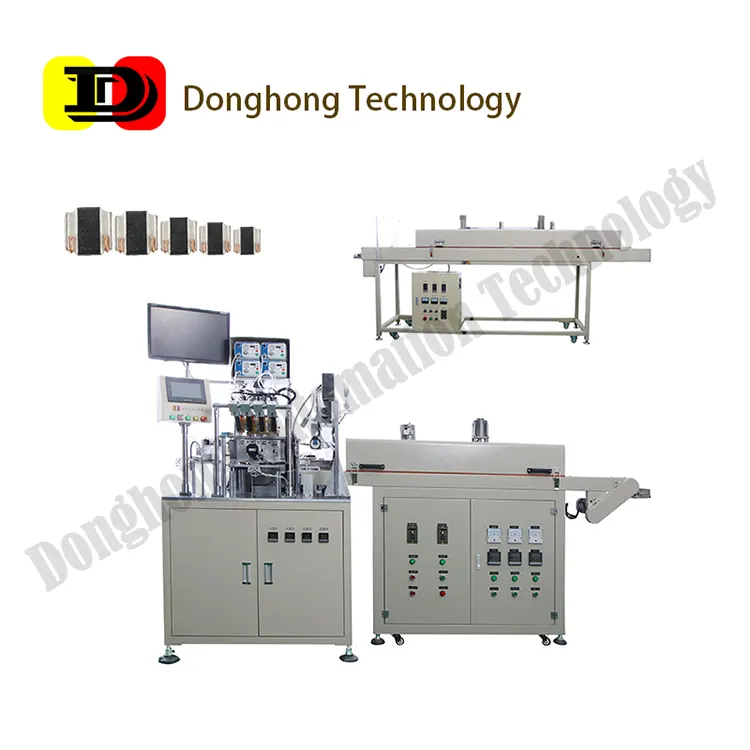
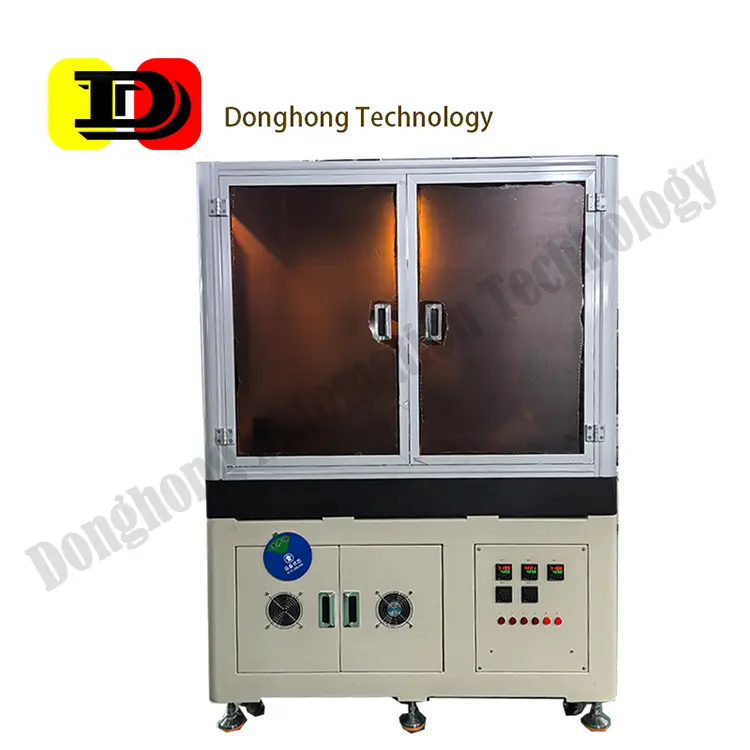
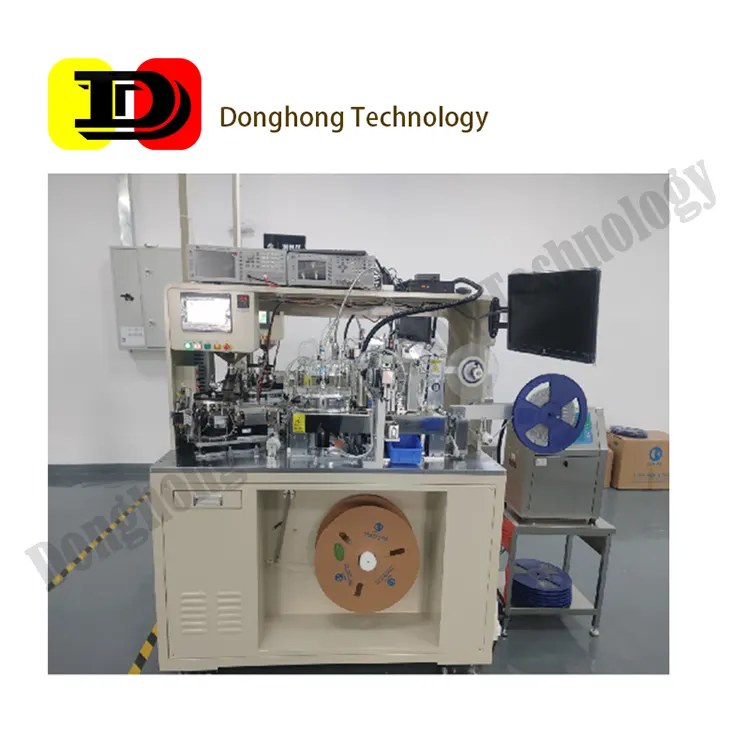
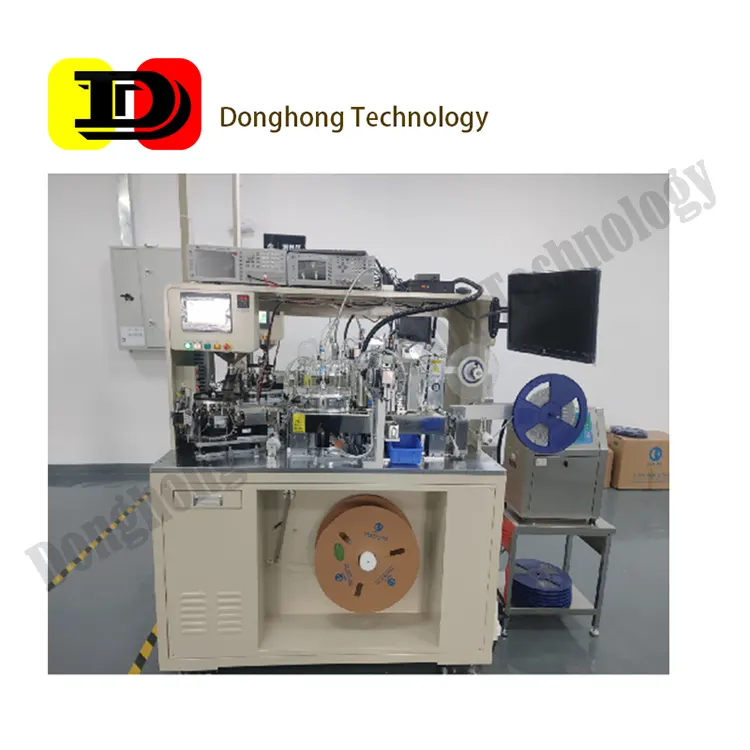
Dongguan Donghong Automation Technology has supplied inductor automation equipment since 2013 and now covers winding, gluing, soldering, testing and packaging machines across seven inductor families — T-Core, common mode, NR, high-frequency ceramic, molded, shielded and CD. That breadth is relevant to staged planning because it means the later stages can come from the same supplier, and the tolerance handover between processes stays within one engineering responsibility.
Stage one: proving the process on one machine
Choose the machine that controls your critical parameter — in most inductor applications, that is winding. The objective of stage one is not output. It is to answer three questions with data:
- Can the machine hold the tolerance your finished part requires, measured on your wire and your core, over a full shift?
- What is the actual scrap rate, and where does the scrap occur?
- Can your operators run it — including setup, program change and routine recovery from a fault — without the vendor's engineer standing next to them?
Run the machine for a defined production period before committing to stage two. One week of three-shift running on your own materials will reveal more than any demonstration. Pay particular attention to the shift-to-shift variation: a machine that holds tolerance on the day the vendor visits and drifts overnight has a thermal compensation problem, and that is a specification discussion you want to have before you buy the rest of the line.
Stage two: eliminating manual handoffs
Once winding is proven, add the complementary processes. The selection criterion for stage two is not price but handoff elimination: every point where a human moves parts between machines is a point where orientation can be lost, contamination introduced and cycle time made unpredictable.
Typical stage-two sequence for an inductor line:
- Gluing — if the coil is not already fixed by an integrated winding-and-gluing unit. Adding gluing removes the manual transfer of loose coils, which is where wire deformation most often occurs.
- Soldering — robotic soldering replaces manual or batch soldering and removes the operator-dependent thermal profile.
- Testing and packaging — integrated test-and-pack removes the final manual stage and, more importantly, creates a traceability record per part.
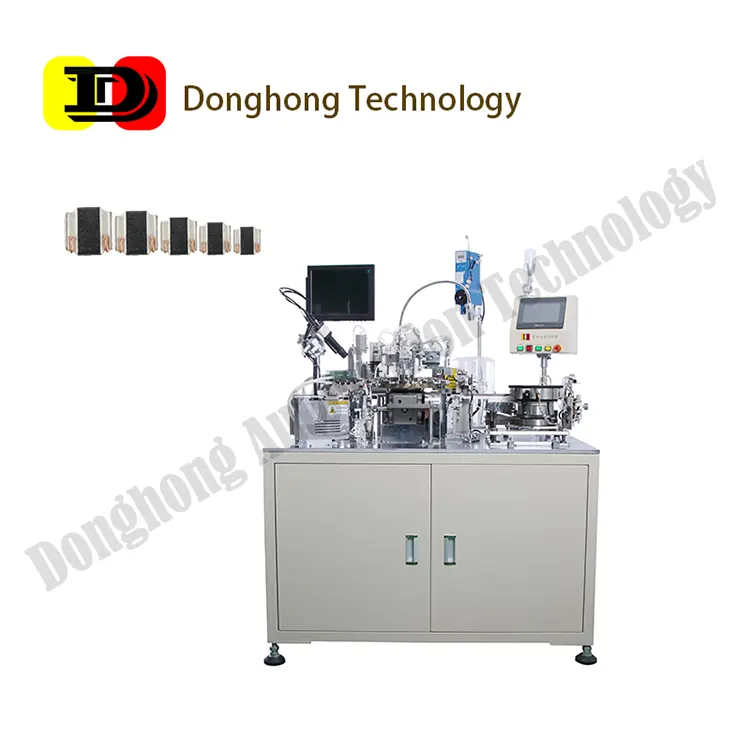
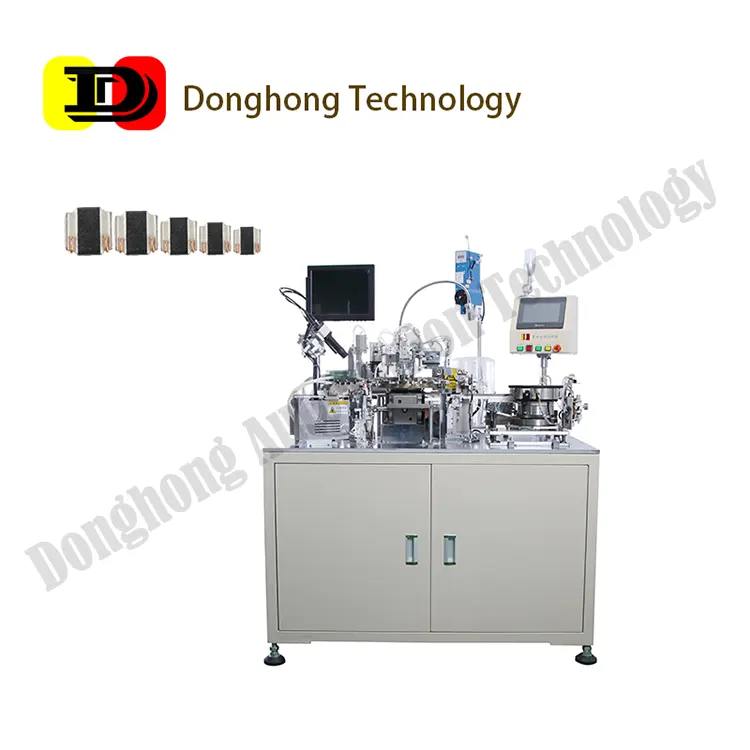
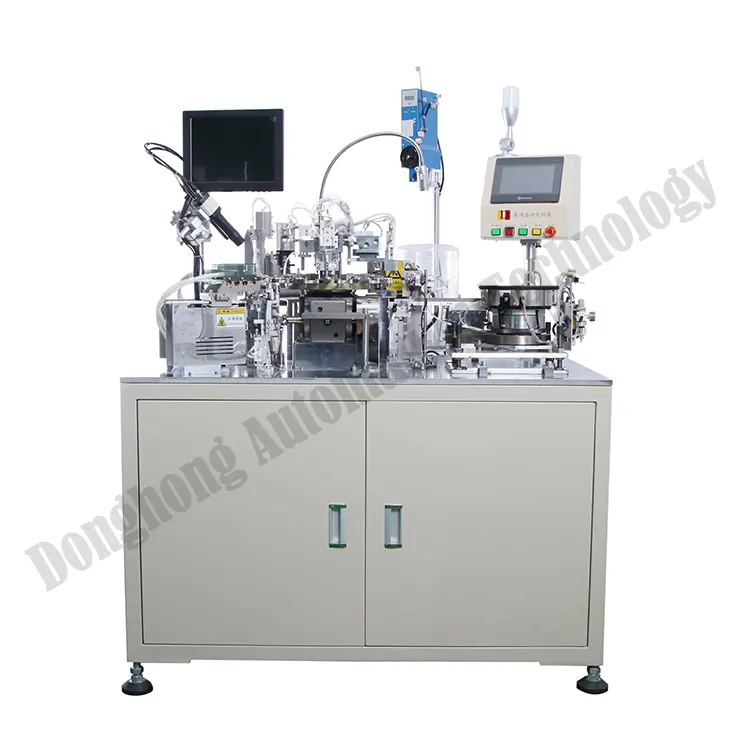
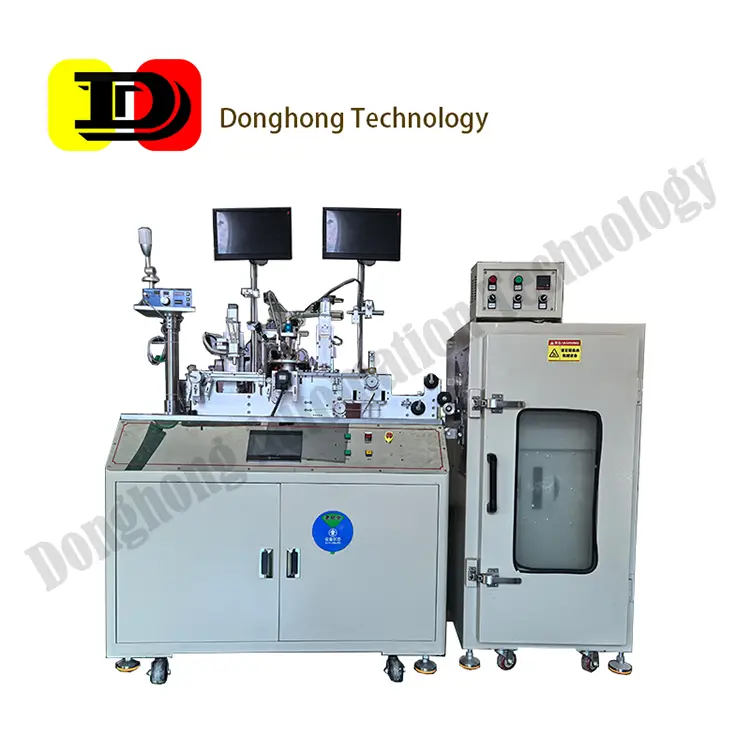
An intermediate option worth considering is a winding-and-gluing integrated machine. It combines two processes in one platform, which reduces floor space and removes the most delicate handoff — the transfer of a loose coil — at the cost of less flexibility in changing one process independently later. For a factory committing to one part family at volume, the integrated unit is usually the better economics; for a high-mix factory, separate units are more adaptable.
Stage three: adding capacity without adding risk
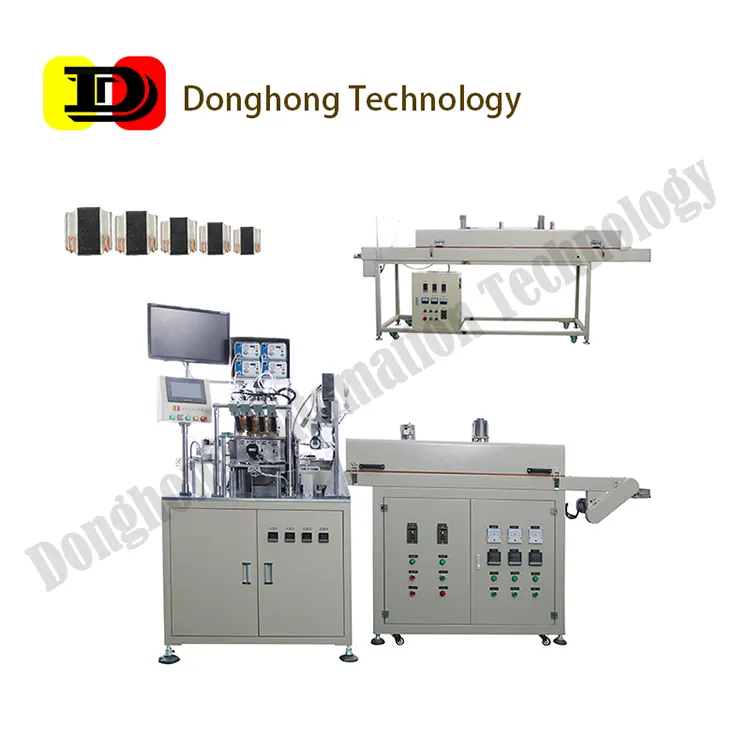
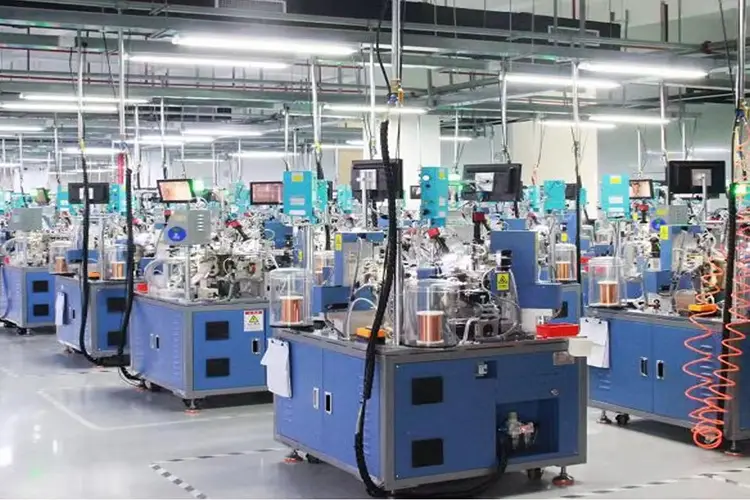
Stage three is replication. Add parallel units at the configuration proven in stages one and two. Because the configuration is already validated, the incremental risk is low, and output scales roughly linearly with unit count.
Two planning points specific to this stage:
- Utility and floor planning. Parallel units need power, compressed air and extraction capacity planned as a group. Retrofitting services to a line that was laid out for one machine is a common and avoidable cost.
- Spare-part and maintenance standardisation. Keeping all units on the same platform means one spare-parts inventory and one maintenance procedure. Mixing platforms across stages saves money at purchase and costs more over the equipment's life.
Changeover and mix: the hidden specification
| Factory profile | Typical part mix | Preferred architecture | What to specify explicitly |
|---|---|---|---|
| Single-family, high volume | One or two part numbers, runs measured in weeks | Dedicated line; indexing disc test-and-pack; integrated winding-gluing | Output per hour at the actual cavity count; service and spare-part availability |
| Multi-family, medium volume | Three to six families, runs measured in days | Configurable platforms; separate winding and gluing for flexible changeover | Changeover time in minutes, measured on your parts; fixture cost per family |
| High mix, low volume | Many part numbers, frequent changeover | In-line test-and-pack rather than indexing disc; modular stations | Program storage capacity; setup procedure simplicity; operator training depth |
Integration with equipment you already own
Most factories planning a line already own some equipment. Integration decisions should be made explicitly rather than by default:
- Keep existing equipment where it holds tolerance. A machine that is meeting your quality requirement does not need replacing because it is older. Replace it when it becomes the constraint on output or on tolerance.
- Match the interface, not the brand. What matters between two machines is the material handling interface: part orientation, transfer height, cycle handshake and buffer capacity. If the interface is specified, mixed brands can work together.
- Plan the buffer. Any two machines that can stop independently need a buffer between them, sized for the longest expected single-machine stoppage. Without a buffer, the slower machine sets the line output and every fault propagates.
Lead time, installation and commissioning timeline
Equipment lead time is a planning input, not a surprise to be absorbed. A realistic sequence:
- Specification review — the supplier reviews your part datasheet, target output and existing line, and returns a configuration proposal with tolerance allocation.
- Configuration and build — the machine is built to the agreed configuration. Non-standard cavity counts, special material handling or custom fixturing extend this phase.
- Factory acceptance — the machine runs on your parts (or representative parts) before shipment. Insist on this: it is far cheaper to correct a tolerance issue in the supplier's factory than after installation.
- Installation and commissioning — on-site mechanical installation, utility connection, then commissioning to the agreed output and tolerance.
- Operator training and handover — training on setup, program change, routine maintenance and fault recovery, ending with your operators running a shift independently.
- Post-installation support — a defined support window for process optimisation as your part mix evolves.
Ask for each phase as a separate line item in the proposal, with its own duration. A single combined lead-time figure hides where the schedule risk sits.
Planning checklist for each stage
- Stage one: Have you run the critical-parameter machine on your own materials for at least a full production week? Have you measured shift-to-shift variation, not just within-shift?
- Stage two: Have you listed every manual handoff in the current process and confirmed the new equipment removes it? Have you specified the interface between machines?
- Stage three: Have you planned utilities for the full parallel configuration, and standardised on one platform for spares and maintenance?
- All stages: Is changeover time specified in minutes for your actual part mix? Is factory acceptance testing defined as a contractual step? Is operator training part of the scope, not an optional extra?
If you send us your part datasheet, target monthly output and a list of equipment you already own, our engineers will return a staged line proposal with the configuration, tolerance allocation and lead-time breakdown for each stage. Send an inquiry to start that review.
Frequently asked questions
How long should stage one run before moving to stage two?
At least one full production week across all shifts, on your own materials. The purpose is to observe variation over time — a single day does not reveal thermal drift, material lot variation or shift-to-shift operator effects. If your part mix is seasonal, run stage one during your busiest, most demanding period rather than a quiet one.
Should I buy an integrated winding-and-gluing machine or two separate machines?
It depends on mix. An integrated unit removes the most delicate handoff (a loose coil) and uses less floor space, which suits a factory committing to one family at volume. Separate machines allow one process to be upgraded or changed independently, which suits factories expecting their family mix to shift. Decide based on your three-year product roadmap, not on your current order book.
How do I specify changeover time realistically?
Ask for it measured on your parts, not the vendor's. Include fixture change, program change, first-article verification and the time until the line is producing at full output again. A figure that excludes first-article verification is typically optimistic by a factor of two, and first-article verification is not optional if you are shipping to a customer with incoming inspection.
What is factory acceptance testing and why insist on it?
Factory acceptance testing (FAT) is a structured run of the machine in the supplier's facility on your parts, against the agreed output and tolerance criteria, before shipment. It matters because correcting a tolerance problem in the supplier's factory costs a fraction of correcting it after the machine is installed and your line is committed. Define the acceptance criteria and the sample size as part of the purchase contract.
How much spare capacity should I plan for in stage three?
Plan for the output you expect at the end of the equipment's useful life, not at the moment of purchase. Because stage three is replication at a proven configuration, the cost of under-planning is a later, more disruptive second installation. Reserve floor space, power and compressed-air capacity for the full configuration even if you install units progressively.
Dongguan Donghong Automation Technology Co., Ltd. was established in 2013 in Dongguan, Guangdong, operating from a 5,000 sqm facility with more than 80 employees, over 50 patents and 8 software copyrights. We design, manufacture and support inductor automation lines covering winding, gluing, soldering, testing and packaging for T-Core, common mode, NR, high-frequency ceramic, molded, shielded and CD inductors. Contact us to plan your line.